
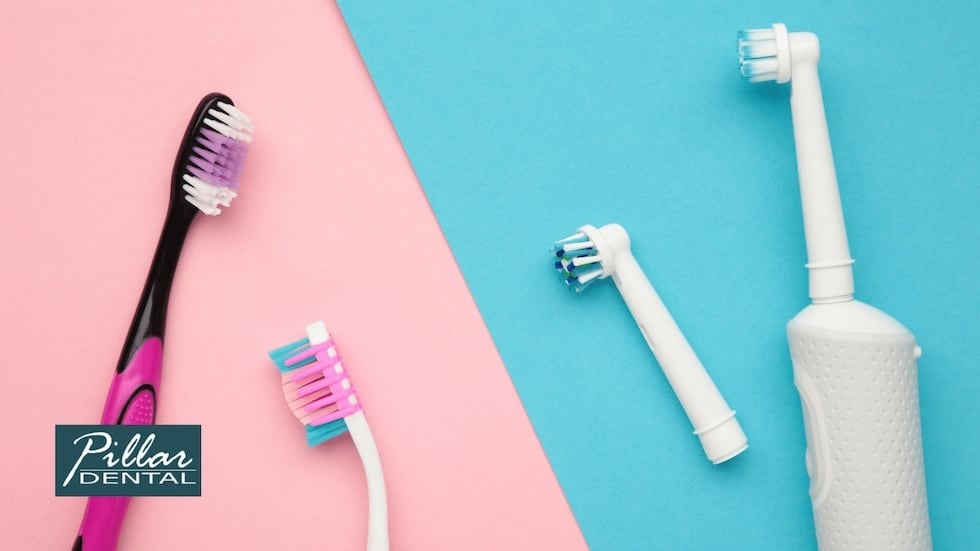
Choosing the right toothbrush can feel like a small decision, but for many families who visit Pillar Dental, it’s where healthier smiles begin.
Research from the University of Iowa and other dental experts shows there isn’t always a single “best” brush. Manual and electric toothbrushes can both clean well. What matters most is how you use them, and whether the brush fits your needs and routine.
Electric toothbrushes often help people who struggle with technique. Many models include built‑in two‑minute timers and 30‑second pacers to guide you around your mouth. That extra time and structure can lead to better plaque removal and lower risk of gingivitis, especially for patients with braces, arthritis, or limited dexterity.
Manual toothbrushes, on the other hand, are affordable, easy to find, and don’t need charging or replacement heads. When used with proper technique — gentle, short strokes along the gum line for a full two minutes — they can be just as effective as electric options. For some patients, especially kids learning good habits, picking a manual brush they’re excited to use twice a day is the key.
Bristle type and brush upkeep matter, too. Most dental sources agree that soft bristles are safest for gums and enamel, while hard bristles or aggressive scrubbing can actually damage teeth and irritate tissue. No matter which brush you choose, replacing it about every three months or sooner, if the bristles are frayed, helps keep it working as intended.
Because every mouth is different, the team at Pillar Dental encourages patients to bring their current toothbrush, or photos of options they’re considering, to their next visit. That gives the dentist and hygienist a chance to talk through comfort, gum sensitivity, orthodontic appliances, and lifestyle to recommend a brush that fits.
Pillar Dental welcomes new and returning patients who have questions about improving their at‑home brushing routine. Schedule your visit today!