
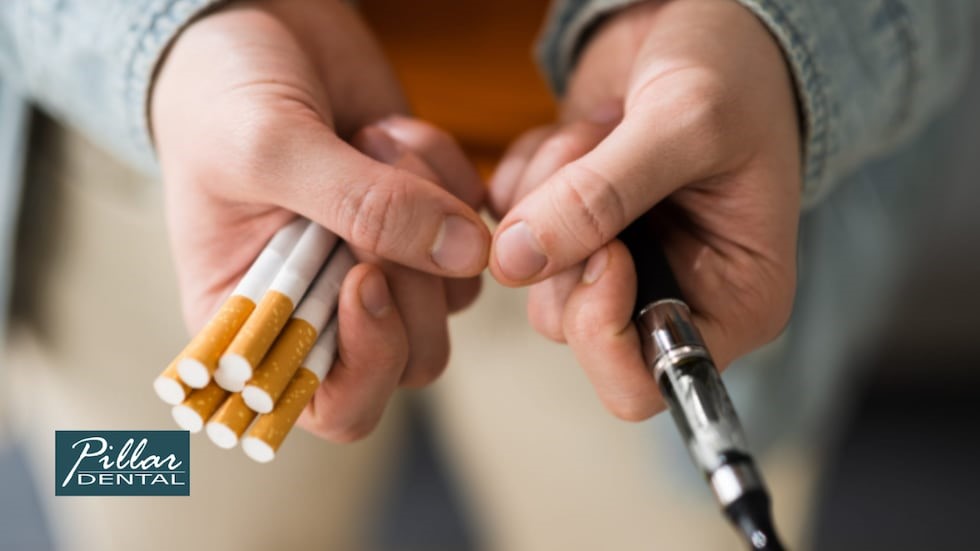
From dry mouth to tooth loss, tobacco use leaves clear fingerprints in the mouth – and vaping is not the harmless alternative many people hope it is, especially for teens and young adults.
Research reviewed by the U.S. Food and Drug Administration (FDA) shows that traditional tobacco products like cigarettes, cigars and hookah raise the risk of oral cancers, serious gum infections (periodontitis), tooth decay and tooth loss.
Smokers are also more likely to develop stained teeth and persistent bad breath as smoke and tar build up on tooth surfaces and along the gumline.
E-cigarettes and vapes deliver nicotine and other chemicals differently, but they still affect the mouth. A 2024 review in the journal Medicina found that vaping is linked with higher rates of gingivitis and periodontitis, more cavities and reduced antioxidant capacity in saliva – the mouth’s natural defense system. When saliva can’t neutralize acids or fight bacteria as well, plaque builds up faster and gum disease can progress more quickly.
Health agencies also warn that what’s in vape “juice” matters. The FDA notes that aerosols from e-cigarette liquids stick to gums, cheeks, the tongue and teeth, making it easier for cavity‑causing bacteria to cling and grow. An Australian health department explains that common ingredients such as propylene glycol and vegetable glycerin can vaporize into acidic compounds that erode enamel, especially when combined with sweet flavorings that leave a sticky residue on teeth.
People who vape or smoke are also more likely to have dry mouth, altered taste, bad breath and slower healing after extractions, implants or gum surgery. Because nicotine reduces blood flow to the gums and weakens the immune response, infections can be harder to control and treatments for gum disease may not work as well.
The good news is that stopping use of tobacco and vaping products can reduce these risks. Studies show that quitting improves gum health and, over time, brings the risk of mouth cancer closer to that of non‑users.
Regular dental checkups, daily brushing and flossing, staying hydrated and talking with a dentist or physician about evidence‑based tools to help you quit can all help protect oral health at any age.